
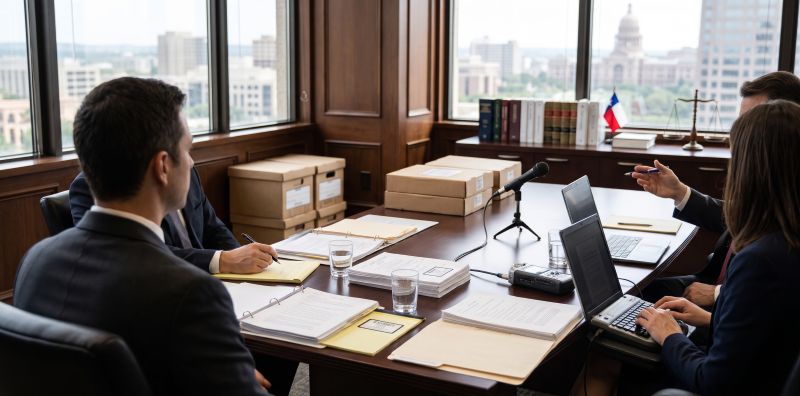
Taking a deposition is one of the most critical moments in a Texas lawsuit. While it takes place in a conference room rather than a police interrogation room, the strategic dynamics are strikingly similar.
Whether you are testifying in a criminal investigation or defending a civil suit under the Texas Rules of Civil Procedure, the fundamental rule of giving testimony remains the same: anything you say can and will be used against you.
The "Talk to Cops" Rule: Why Less Is Always More
When individuals interact with law enforcement officers, they often naively believe that explaining their side of the story will persuade the investigator to drop the matter. In reality, investigators gather information to build a case and uncover inconsistencies.
A civil deposition operates under the exact same principle:
- Opposing Counsel Is Not Looking to Clear You: The attorney asking you questions is not looking for proof of your innocence or searching for reasons to drop the lawsuit.
- Building Impeachment Evidence: Opposing counsel examines every detail you provide. If you misremember a minor fact, guess, or contradict a prior statement, the opposing attorney will use that inconsistency to impeach your credibility in front of a judge or jury.
- The Goal of Testimony: Your sole duty during a deposition is to answer the specific question asked truthfully and succinctly never to argue, educate, or attempt to "win" your case on the spot.
Understanding Procedural Objections Under TRCP 199.5
During a Texas oral deposition, your attorney sits beside you to safeguard the record and enforce state procedure. However, unlike dramatic television trials, Texas court rules strictly limit how attorneys can object during live questioning.
Under Texas Rule of Civil Procedure 199.5(e), legal objections during an oral deposition are restricted to concise statements:
- "Objection, Form": This standard objection is raised when a question is improperly phrased, ambiguous, compound, leading, or argumentative.
- "Objection, Leading": Raised when opposing counsel asks a leading question during direct examination where it is procedurally impermissible.
- "Objection, Privilege": The rare instance where an attorney instructs a witness not to answer a question to protect attorney-client privilege or confidential information.
When your attorney states "Form" or "Objection, form," they are preserving the objection for the court record while allowing the deposition pace to continue smoothly. Unless your attorney explicitly instructs you not to answer based on privilege, you must still answer the question to the best of your knowledge.
Three Core Strategies for Deposition Success
To protect your claims and avoid falling into procedural traps during cross-examination, keep these three strategic guidelines in mind:
- Pause Before Speaking: Always take a two-to-three-second breath after a question is asked. This gives your attorney time to interject with a formal objection and gives you time to digest the prompt.
- Answer Only What Is Asked: If an attorney asks what time it is, tell them the time; do not explain how the watch was built. Volunteering extra narrative explanations provides opposing counsel with new avenues for questioning.
- Never Guess or Speculate: Under Texas Rule of Evidence 602, witnesses must testify based on personal knowledge. Stating "I don't recall" or "I don't know" is a completely valid and truthful answer if you do not have direct knowledge of a fact.
Preparing thoroughly with an experienced Texas litigation attorney ensures that you approach your deposition with confidence, answer questions accurately under oath, and protect your legal rights.
All information provided on Silblawfirm.com (hereinafter "website") is provided for informational purposes only, and is not intended to be used for legal advice. Users of this website should not take any actions or refrain from taking any actions based upon content or information on this website. Users of this site should contact a licensed Texas attorney for a full and complete review of their legal issues.