
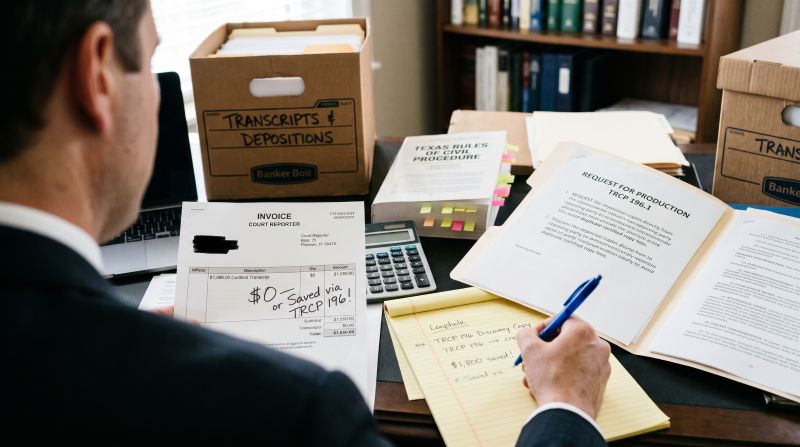
Civil litigation in Texas can become financially draining, with discovery expenses often representing the largest portion of a client's legal bill. Among these expenses, stenographic court reporter fees stand out: ordering certified copies of deposition transcripts regularly costs anywhere from $1,000 to $2,000 or more per session.
However, strategic litigators use a simple, completely legal discovery rule to obtain deposition testimony without paying exorbitant court reporter copy fees.
The High Cost of Court Reporter Transcripts
When a deposition is taken, the party conducting the examination pays the court reporter for their appearance time and the initial preparation of the certified transcript.
When the other parties in the lawsuit want their own copy, court reporting agencies typically charge substantial fees for each additional certified transcript or electronic file. In multi-party litigation or cases involving multiple expert and lay witnesses, purchasing official transcript copies directly from the court reporter can easily add tens of thousands of dollars to the cost of a case.
Requesting Deposition Copies Under TRCP 196
Rather than paying court reporting agencies for duplicate copies of every deposition, savvy litigators turn to Texas Rule of Civil Procedure 196 (Requests for Production).
Under Texas discovery rules, a party is entitled to inspect and obtain copies of relevant documents within an opponent's possession, custody, or control:
- Possession and Control: Once the opposing attorney purchases and receives a copy of a deposition transcript, that document is officially in their possession and control.
- Not Protected Work Product: While an attorney’s handwritten notes, mental impressions, and trial strategy are protected from disclosure, the underlying deposition transcript itself is not privileged work product.
- The Discovery Request: Under TRCP 196.1, you can serve a formal Request for Production demanding copies of all completed deposition transcripts and exhibits in the opposing party's possession.
Once served with a valid request, the opposing party is legally required to produce the document, allowing you to obtain an electronic copy for the simple cost of production.
Slashing Litigation Costs for Clients
Utilizing written discovery to obtain transcripts allows litigators to review sworn testimony, prepare cross-examinations, and draft trial outlines while saving clients thousands of dollars in redundant vendor fees.
- Internal Trial Preparation: For outlining testimony, preparing impeachment questions, and conferring with experts, a produced copy serves the exact same practical purpose as an expensive reporter copy.
- When Certified Copies Matter: Under Texas Rule of Civil Procedure 203.3, filing a formal summary judgment motion or introducing official record excerpts at trial may occasionally require certified copies with court reporter certificates. Even then, parties can wait to purchase only the specific certified transcripts truly needed for trial filings rather than buying every transcript upfront.
Leveraging the Texas Rules of Civil Procedure to minimize unnecessary discovery costs helps keep litigation focused on the merits of the dispute rather than administrative overhead.
All information provided on Silblawfirm.com (hereinafter "website") is provided for informational purposes only, and is not intended to be used for legal advice. Users of this website should not take any actions or refrain from taking any actions based upon content or information on this website. Users of this site should contact a licensed Texas attorney for a full and complete review of their legal issues.