
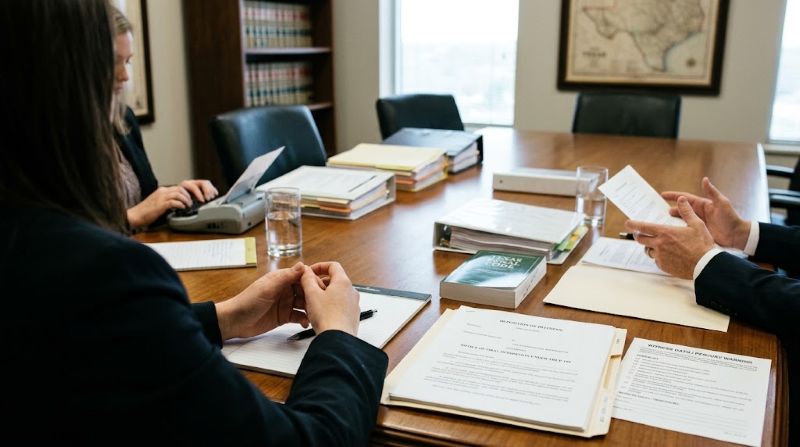
Taking a deposition is one of the most pivotal moments in any Texas civil lawsuit. For a non-attorney, walking into a conference room (or joining a virtual screen) to face hours of questioning under oath can be an overwhelming experience.
Before any substantive questions begin, opposing counsel will deliver a standard, formal warning that sets a serious, high-stakes tone: you are under oath, and any false statements can expose you to criminal perjury charges.
Understanding how depositions operate and how to handle questioning without panic is essential to protecting your legal rights and presenting an effective defense or claim.
Understanding the Formal Deposition Warning
Under Texas Rule of Civil Procedure 199, an oral deposition allows an opposing party to question a witness under oath before a certified court reporter.
Before delving into the facts of the case, opposing counsel typically establishes a formal record by confirming that:
- You Are Under Oath: You swear or affirm to tell the truth under penalty of perjury.
- Perjury Penalties Apply: Under Texas Penal Code § 37.02, making a materially false statement under oath with intent to deceive constitutes a Class A misdemeanor, carrying penalties of up to one year in jail and fines up to $4,000.
- Competency and Impairment Checks: Counsel will ask if you are under the influence of any medication, alcohol, or condition that prevents you from understanding and answering questions truthfully.
While this initial warning sounds intimidating, its primary purpose is to ensure that the witness understands the gravity of the proceeding and that the recorded transcript can be used at trial.
Common Deposition Questioning Structures
Unlike casual conversations, an attorney questioning a witness at a deposition follows a deliberate strategy designed to build a factual foundation and uncover key admissions.
Attorneys typically use one of two primary questioning frameworks:
1. The Linear / Foundation-Building Approach
The examining attorney starts with foundational background details before systematically moving through the timeline of the dispute:
- Educational & Professional History: Reviewing degrees, licenses, and relevant job experience.
- Factual Chronology: Walking step-by-step through dates, meetings, signed contracts, or communications.
- Core Disputed Issues: Focusing on the specific elements of the claims or defenses raised in the pleadings.
2. The Circular / Impeachment Approach
Instead of following a simple timeline, an attorney may jump between different events or compare prior written statements (such as interrogatory answers or emails) against your live responses. This technique is used to test consistency and uncover potential contradictions.
Essential Rules for Testifying Under Oath
When preparing for a deposition in Texas civil litigation, keeping a few fundamental principles in mind will help you navigate questioning confidently:
- You Cannot "Win" Your Case at a Deposition: A deposition is an information-gathering tool for the opposing side. You are there to answer questions accurately—not to argue your case, convince opposing counsel, or offer unsolicited explanations.
- Keep Answers Succinct: Answer only the specific question asked. If a question can be answered with a simple "yes" or "no," stop there. Volunteering extra information gives the opposing side new avenues to explore.
- Do Not Guess or Speculate: If you do not know the answer or do not recall a specific detail, state that clearly. Speculating under oath can create unnecessary fact issues that may be used against you later.
- Let Your Attorney Object: Pause briefly after each question before speaking. This gives your attorney time to state any procedural or legal objections on the record.
Working closely with an experienced Texas litigation attorney to prepare before your deposition ensures you understand the process, remain calm under pressure, and deliver clear, truthful testimony.
All information provided on Silblawfirm.com (hereinafter "website") is provided for informational purposes only, and is not intended to be used for legal advice. Users of this website should not take any actions or refrain from taking any actions based upon content or information on this website. Users of this site should contact a licensed Texas attorney for a full and complete review of their legal issues.