
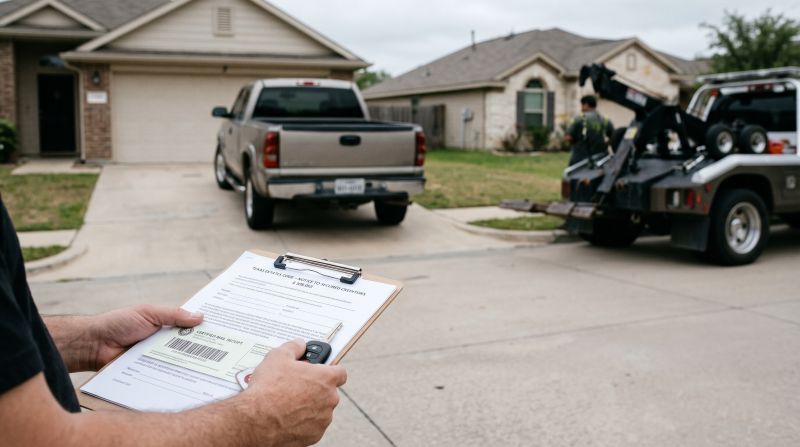
When a loved one passes away owning a financed vehicle, real estate with an outstanding mortgage, or personal debt, surviving family members often face immediate questions about creditor rights. A common misconception among heirs and estate representatives is that the commencement of probate automatically freezes all collection efforts and prevents lenders from taking action.
In reality, the practical enforcement of secured debts particularly automobile loans often moves much faster than the probate court calendar. Understanding how Texas probate law treats secured and unsecured creditors is critical to protecting estate assets.
The Rapid Reality of Auto Repossession vs. Probate Timelines
While real property foreclosures in Texas require structured statutory notice timelines, automobile lenders move with far greater speed when loan payments stop.
Under vehicle financing contracts and Chapter 9 of the Texas Business and Commerce Code, auto lenders possess the right of self-help repossession once a loan defaults:
- The 45-Day Repossession Window: Unlike mortgage servicers that often wait months before scheduling a foreclosure sale, vehicle lienholders routinely dispatch repossession agents once an account falls 40 to 45 days in arrears.
- The Probate Delay: Retaining an attorney, filing an application for probate, obtaining citation, and securing a court hearing for Letters Testamentary or Letters of Administration regularly takes four to eight weeks.
- Pre-Hearing Loss: Because repossession happens so quickly after missed payments, financed vehicles are frequently repossessed long before an executor or administrator is officially appointed by the court.
If family members intend to retain an inherited vehicle, they should communicate with the auto lender immediately to maintain monthly payments while the probate estate is formally established.
Mandatory Notice to Secured Creditors Under Texas Estates Code § 308.053
Once an executor or administrator formally qualifies and receives Letters Testamentary or Letters of Administration from the probate court, specific statutory notice requirements take effect.
Under Texas Estates Code § 308.053, the personal representative must give written notice within two months after qualifying to every known creditor holding a claim secured by real estate or personal property of the estate:
- Certified Mail Requirement: Notice must be delivered via certified or registered mail with return receipt requested.
- Content of Notice: The notice must state that letters have been issued, identify the representative, provide an address for claims, and specify the date the letters were granted.
- Controlling the Foreclosure Process: Once administration opens and formal notice is delivered, secured lenders cannot simply foreclose on real property without following the probate claim procedures outlined in Texas Estates Code Chapter 355. Lenders must formally elect whether their debt will be treated as a "matured secured claim" or a "preferred debt and lien" against the property.
Permissive Notice to Unsecured Creditors Under Texas Estates Code § 308.054
While notice to secured creditors is mandatory, Texas probate law provides an optional mechanism for cutting off general unsecured debts, such as credit card balances and unsecured personal loans.
Under Texas Estates Code § 308.054, an estate representative may issue permissive notice to an unsecured creditor having a claim for money against the estate:
- The 120-Day Bar: The permissive notice expressly informs the creditor that they must present an authenticated claim within 120 days after the date the notice is received. If the creditor fails to present a formal claim within that statutory window, the debt is permanently barred by law.
- Practical Reality vs. Client Costs: Although sending permissive notice provides an absolute bar to late claims, many probate practitioners choose not to incur the expense of serving multiple unsecured creditors. In practice, third-party collection agencies handling credit card accounts frequently send letters and place phone calls to estate representatives, but rarely take the formal, sworn legal steps required to submit an authenticated claim in a Texas probate court.
Navigating creditor claims, vehicle liens, and real estate mortgages requires careful adherence to the Texas Estates Code. Consulting an experienced Texas probate attorney ensures that statutory notices are properly dispatched, estate property is protected, and invalid claims are successfully barred.
All information provided on Silblawfirm.com (hereinafter "website") is provided for informational purposes only, and is not intended to be used for legal advice. Users of this website should not take any actions or refrain from taking any actions based upon content or information on this website. Users of this site should contact a licensed Texas attorney for a full and complete review of their legal issues.