
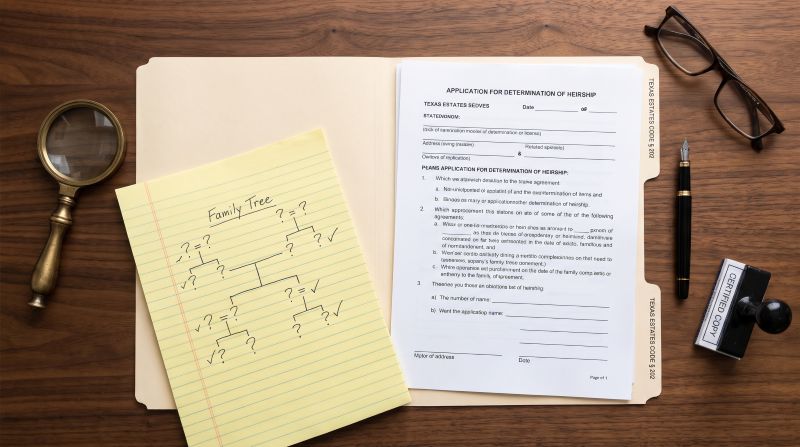
When an individual dies without a valid last will and testament in Texas, their estate passes according to state intestate succession laws. However, before assets can be collected, retitled, or distributed, the probate court must formally identify who the legal heirs are. This is accomplished through a statutory legal action known as a Judicial Determination of Heirship.
A common source of confusion for families navigating this process is the court's appointment of an independent attorney known as an attorney ad litem even when all surviving family members agree on who the heirs are.
Why Texas Probate Courts Require an Attorney Ad Litem
Under Texas Estates Code § 202.009, the probate judge is statutorily mandated to appoint an attorney ad litem in every proceeding to declare heirship. This requirement cannot be waived by agreement of the family or by the court.
The purpose of the attorney ad litem is to protect the interests of:
- Unknown or undetermined heirs;
- Heirs who cannot be located; and
- Heirs who may be minors or incapacitated.
While surviving family members often believe their family tree is completely clear, Texas law requires an independent inquiry. The ad litem ensures that potential unknown children (such as children born from other relationships or unknown paternity claims) are given legal representation before a court enters a final, binding judgment that permanently forecloses their inheritance rights.
To cover the ad litem's independent investigation, Texas probate courts typically require the applicant to deposit a fee usually between $700 and $800 into the court registry at the time the application is filed.
Citation, Publication, and Distributee Waivers
To give all potential claimants notice of the proceeding, Texas law imposes formal citation requirements:
- Notice by Publication: Under Texas Estates Code § 202.052, a notice must be published in a designated local legal newspaper (such as the Daily Court Review in Harris County) or posted online to alert any unknown heirs of the pending heirship application.
- Service of Known Heirs: Every known heir must be personally served with citation under Texas Estates Code § 202.051.
- Waiver of Citation: In uncontested estates where the family members are cooperating, known heirs can sign and file a Waiver of Citation and Distributee Consent. This avoids personal service by a process server while simultaneously consenting to an Independent Administration under Texas Estates Code § 401.002, allowing the estate to proceed smoothly and out of court oversight.
The Hearing: Disinterested Witnesses and Proof of Death
Before a judge will sign an Order Determining Heirship, strict evidentiary standards must be satisfied under Texas Estates Code § 202.151.
The law requires live testimony from two disinterested witnesses—individuals such as long-time family friends, neighbors, or colleagues who knew the decedent's family history well and have no financial stake in the estate. The attorney ad litem interviews these witnesses prior to the hearing to verify that no children, prior marriages, or legal adoptions were omitted.
Additionally, the applicant signs a formal Proof of Death and Other Facts, reducing their factual testimony to writing as required in probate proceedings. Once the court approves the proof, it enters a Judgment Declaring Heirship establishing each heir’s exact percentage interest in the estate.
Qualifying as Independent Administrator and Next Steps
Along with determining heirship, the court appoints an administrator to manage the estate. If all heirs consent, the court will appoint an Independent Administrator and waive the expensive requirement of posting a surety bond under Texas Estates Code § 401.003.
To officially take charge of the estate, the appointed administrator completes key statutory requirements:
- Oath of Office: The administrator files a sworn oath under Texas Estates Code § 305.051, after which the clerk issues official Letters of Administration.
- Notice to Creditors: Under Texas Estates Code § 308.051, the administrator must publish a notice to creditors in a local newspaper within 30 days of appointment.
- Inventory or Affidavit in Lieu: Within 90 days, the administrator must either file a verified Inventory, Appraisement, and List of Claims with the court or file an Affidavit in Lieu of Inventory pursuant to Texas Estates Code § 309.056 after providing the accounting directly to all distributees.
Navigating Texas heirship and intestate probate administration requires strict adherence to statutory deadlines and court rules. Consulting an experienced Texas probate attorney ensures that your loved one's estate is resolved efficiently, lawfully, and without unnecessary procedural delays.
All information provided on Silblawfirm.com (hereinafter "website") is provided for informational purposes only, and is not intended to be used for legal advice. Users of this website should not take any actions or refrain from taking any actions based upon content or information on this website. Users of this site should contact a licensed Texas attorney for a full and complete review of their legal issues.