
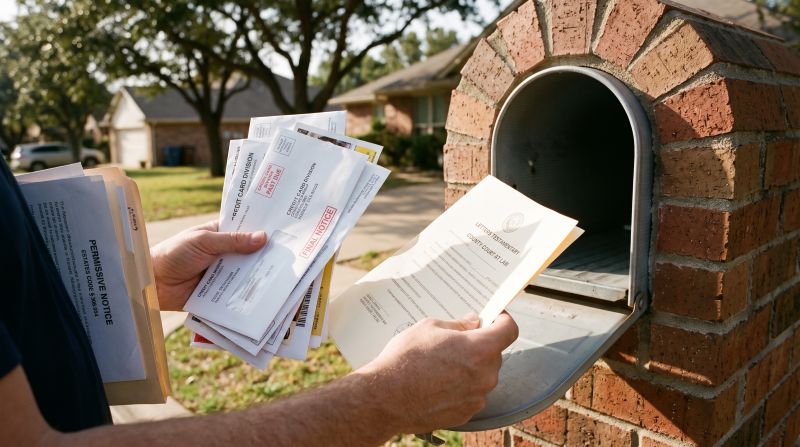
When a loved one passes away, handling the debts of the estate is one of the most critical responsibilities faced by an executor or court-appointed administrator. Surviving family members are often inundated with letters and calls from collection agencies and credit card companies demanding immediate payment.
Under Texas probate law, personal representatives have statutory tools to manage, challenge, and even permanently eliminate unsecured claims including credit card balances through the strategic use of creditor notices.
Mandatory Notice to Secured Creditors vs. Permissive Notice
Texas law treats debts backed by collateral (secured debts) very differently from general obligations like credit cards and personal loans (unsecured debts).
- Mandatory General Publication: Under Texas Estates Code § 308.051, an executor or administrator must publish a general notice to creditors in a local newspaper of general circulation within 30 days of qualifying.
- Mandatory Notice to Secured Creditors: Under Texas Estates Code § 308.053, the representative must send formal written notice by certified or registered mail to all known secured creditors within two months of qualifying. Secured creditors—such as mortgage lenders and vehicle lienholders—possess collateral rights. In fact, vehicle lienholders routinely repossess cars once payments fall 40 to 45 days in arrears, often before the initial probate hearing even occurs. Once estate administration is formally opened, however, secured lenders must proceed through probate procedures before attempting to foreclose on estate property.
- Permissive Notice to Unsecured Creditors: Unlike mortgages and car notes, general unsecured debts (such as credit card accounts) are not subject to a mandatory individual notice requirement. Instead, Texas law provides personal representatives with an optional, powerful mechanism known as permissive notice.
How Permissive Notice Bars Credit Card Debt Under Texas Estates Code § 308.054
Under Texas Estates Code § 308.054, a personal representative may give permissive notice by a qualified delivery method to any unsecured creditor holding a claim for money against the estate.
To effectively bar the debt, the statutory notice must comply with strict statutory criteria:
- State the date the representative's Letters Testamentary or Letters of Administration were issued.
- Identify the address where claims may be presented.
- Include explicit statutory language informing the creditor that they must present the claim before the 121st day after the date of receipt, or the claim is forever barred by law.
If an unsecured credit card company or collection agency fails to present a properly authenticated claim within that 120-day statutory window, the debt is completely extinguished, and the creditor cannot collect from estate assets.
The Practical Reality of Collection Agencies and Unsecured Claims
While sending permissive notices provides the satisfaction of legally wiping out debts, estate representatives and their attorneys must consider whether the process is worth the time and expense.
- Collection Agency Inaction: In practice, third-party collection agencies and major credit card issuers send automated demands and place frequent phone calls, but they rarely take the formal, sworn procedural steps required to authenticate and present a valid claim under Texas Estates Code Chapter 355.
- Evaluating Client Costs: Drafting and serving formal statutory notices via certified mail for multiple credit card accounts incurs legal fees and administrative costs. Because many debt collectors simply walk away when an estate representative does not voluntarily pay, spending client funds to serve permissive notices is often unnecessary.
- Strategic Deployment: Permissive notice is most valuable when dealing with large, aggressive unsecured debts where the creditor actively threatens litigation, or when the executor needs absolute certainty before making final distributions to beneficiaries.
Navigating creditor notices, vehicle repossessions, and debt classifications requires a clear understanding of the Texas Estates Code. An experienced Texas probate attorney can help personal representatives evaluate incoming claims, avoid personal liability, and preserve the maximum value of the estate for its lawful heirs.
All information provided on Silblawfirm.com (hereinafter "website") is provided for informational purposes only, and is not intended to be used for legal advice. Users of this website should not take any actions or refrain from taking any actions based upon content or information on this website. Users of this site should contact a licensed Texas attorney for a full and complete review of their legal issues.