
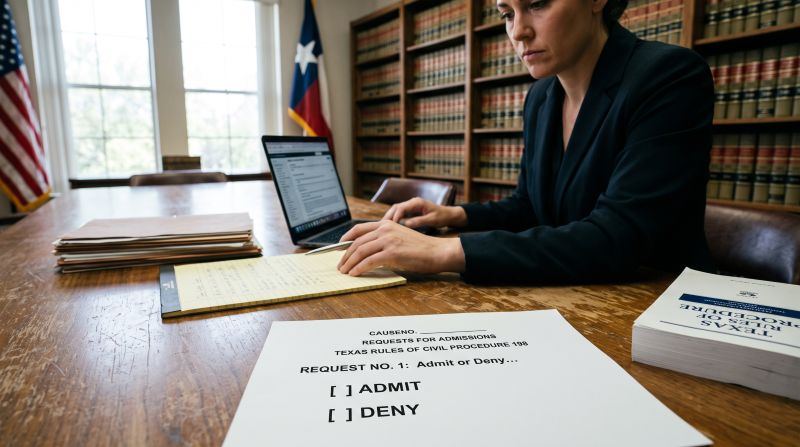
In Texas civil litigation, the discovery phase is designed to bring key facts to light and streamline the issues that actually need to be resolved at trial. While tools like depositions and requests for production are used to uncover new evidence, another critical tool is designed specifically to narrow the scope of a dispute: Requests for Admissions.
Governed by Rule 198 of the Texas Rules of Civil Procedure, Requests for Admissions require an opposing party to formally admit or deny specific facts, legal characterizations, or the authenticity of documents.
What Are Requests for Admissions Supposed to Do?
The primary legal purpose of Requests for Admissions is to eliminate uncontested issues from the lawsuit early on so that neither party wastes time or money proving facts that are not actually in dispute.
Proper Uses of Requests for Admissions
Under TRCP 198.1, a party may serve written requests asking the target party to admit the truth of any matter within the scope of discovery. Legitimate uses include:
- Authenticating Evidence: Asking an opposing party to admit that an attached document is a true and correct copy of a contract, lease, or deed.
- Establishing Signatures: Confirming that a party actually executed a specific document.
- Confirming Uncontested Facts: Establishing basic operational facts, such as confirming that no payment was transferred on a specific date or that a party was present at a location.
By securing these admissions upfront, both sides can focus their time and resources strictly on the genuine points of contention over the remainder of the litigation.
The Misuse of Admissions: Why "Admit You Lose" Requests Are Impermissible
A common tactic among inexperienced litigants is attempting to use Requests for Admissions as a weapon to force the other side to admit liability or surrender their entire case. It is not uncommon to see improper requests such as:
- "Admit that you breached the contract."
- "Admit that you owe $78,000 in damages."
- "Admit that you have no valid legal defense."
Texas courts and established Texas Supreme Court precedent strictly prohibit using Requests for Admissions for this purpose. Requests for admissions are intended to simplify issues, not to compel an adversary to concede the ultimate legal conclusions or merits of their case.
The Danger of Deemed Admissions and How Courts Handle Them
Under Texas Rule of Civil Procedure 198.2, a party served with Requests for Admissions must respond within 30 days. If a party fails to serve a timely response, the requested statements are automatically deemed admitted against them by operation of law—without requiring a court order.
In the past, aggressive parties would send sweeping, improper requests asking an opponent to "admit liability," wait for the 30-day deadline to pass without a response, and then move for an immediate summary judgment based on the "deemed admissions".
However, the Texas Supreme Court has repeatedly stepped in to curb this practice:
- Merits-Preclusive Admissions Barred: Deemed admissions cannot be used to dispose of a case on the merits when they seek an admission of fundamental liability.
- Withdrawal of Deemed Admissions: Under TRCP 198.3, courts will allow a party to withdraw deemed admissions upon showing good cause, provided that the opposing party suffers no undue prejudice and the failure to respond was accidental rather than intentional or the result of conscious indifference.
Understanding how to properly draft and respond to Requests for Admissions under TRCP 198 is essential to protecting your position in Texas state courts. Litigants facing written discovery should consult an experienced Texas civil litigation attorney to ensure compliance and prevent accidental deemed admissions.
All information provided on Silblawfirm.com (hereinafter "website") is provided for informational purposes only, and is not intended to be used for legal advice. Users of this website should not take any actions or refrain from taking any actions based upon content or information on this website. Users of this site should contact a licensed Texas attorney for a full and complete review of their legal issues.