
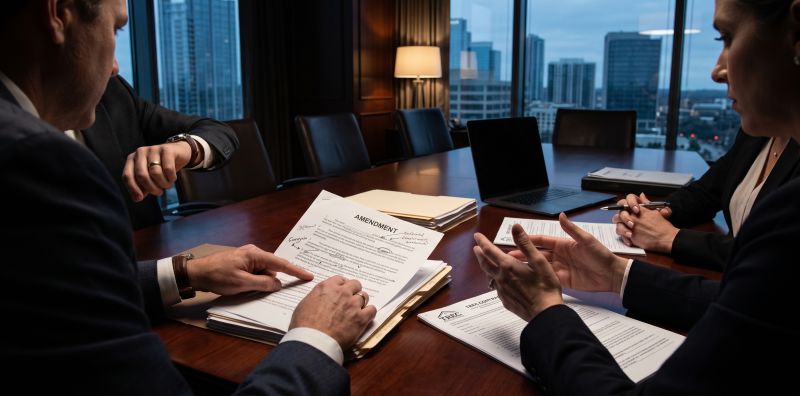
In Texas residential real estate transactions, standard promulgated forms from the Texas Real Estate Commission (TREC) serve as the bedrock for most purchase agreements. However, situations often arise during escrow where buyers or sellers want to adjust terms. When a layperson decides to draft a custom contract amendment using a Word document or an AI tool like ChatGPT, severe legal hazards can emerge.
While amending a contract seems straightforward, drafting custom language without legal oversight frequently creates conflicting terms, confuses title companies, and leads to costly disputes over expenses.
Which Provision Governs in a Contract Conflict?
A primary issue with self-drafted contract amendments is the creation of direct contradictions between the new language and the original boilerplate agreement. When an amendment conflicts with the underlying TREC contract, determining which term takes precedence becomes a central legal question.
- The General Rule: Under standard contract principles, specific, typewritten or drafted amendment language generally supersedes the standard boilerplate provisions of the main contract.
- The Ambiguity Risk: If the amendment is drafted imprecisely, it may not be entirely clear whether a new clause was intended to completely replace an existing section or merely supplement it.
When attorneys draft custom amendments, they routinely include specific "prevailing terms" clauses. These provisions explicitly state that in the event of any conflict between the amendment and the original contract, the terms of the amendment shall strictly govern. Without this explicit language, ambiguous edits leave both parties vulnerable to competing legal interpretations.
The Danger of Broad "Buyer Paid" or "Seller Paid" Language
A common mistake in DIY real estate amendments involves overly broad statements regarding closing costs and expenses. For instance, a seller seeking a specific net payout might insist on inserting a sentence like: "Buyer agrees to pay all closing expenses and seller shall pay no expenses."
While the parties may simply intend to cover standard escrow and recording fees, broad phrasing creates massive unintended consequences. A standard TREC contract itemizes specific buyer and seller closing expenses. A blanket statement declaring the buyer pays "all expenses" fails to define whether that includes things like surveys, property taxes, and other existing property encumbrances.
When buyers or sellers attempt to simplify fee allocations with sweeping language, they often create severe friction right before closing.
Title Company Confusion and Closing Delays
Title companies rely on clear, standardized instructions to prepare closing disclosures and allocate funds accurately. When presented with a non-standard, custom amendment that heavily deviates from TREC promulgated forms, title officers are often forced to halt the closing process.
When custom amendments introduce ambiguity, title officers must ask the parties for explicit written instructions detailing exactly which line-item fees each side is paying. This routinely triggers last-minute arguments between buyers and sellers who realize they had completely different expectations regarding closing costs.
To avoid title delays, escrow disputes, and costly contract misinterpretations, custom modifications to a TREC real estate agreement should always be reviewed or prepared by an experienced Texas real estate attorney.
All information provided on Silblawfirm.com (hereinafter "website") is provided for informational purposes only, and is not intended to be used for legal advice. Users of this website should not take any actions or refrain from taking any actions based upon content or information on this website. Users of this site should contact a licensed Texas attorney for a full and complete review of their legal issues.