
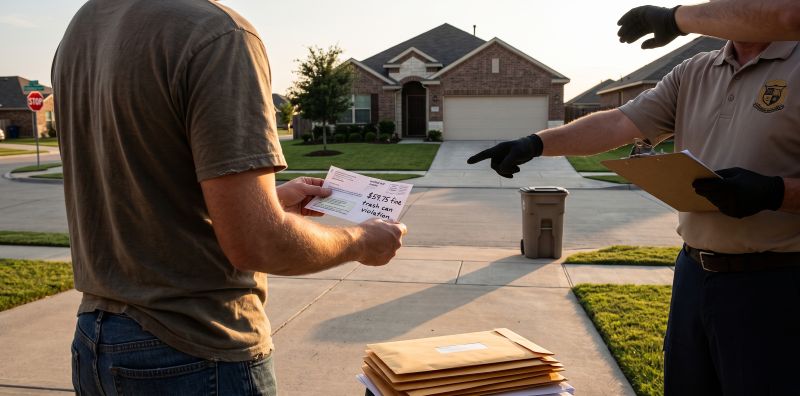
For millions of Texas homeowners, moving into a community governed by a Homeowners Association (HOA) comes with a familiar tradeoff: community amenities and property value standards in exchange for strict covenants, conditions, and restrictions (CC&Rs). But what happens when an HOA oversteps its authority or levies fines that feel blatantly unfair such as a $59.75 monthly penalty for leaving a trash can out an extra day?
While a knee-reflex reaction might be to hire a real estate attorney and drag the HOA to court, Texas property owners face steep legal, financial, and procedural hurdles when challenging association fees.
The David vs. Goliath Financial Reality
When a homeowner receives an absurd or disputed HOA penalty, the urge to fight back on principle is understandable. However, from a practical litigation standpoint, suing a property owners' association over minor fines is almost always a losing financial proposition for the individual homeowner.
- Disproportionate Legal Costs: Initiating a formal lawsuit against a property owners' association typically requires thousands of dollars in upfront legal retainers. Spending $5,000 to $10,000 in attorney fees to fight a $60 fine is simply not a viable strategy.
- Asymmetric Resources: Property owners' associations maintain dedicated legal defense funds funded by community dues. They often retain specialized law firms that operate at lower volume rates specifically designed to handle enforcement actions, giving the association far greater financial staying power than an individual homeowner.
The Danger of the Escalation Snowball
The most dangerous mistake a homeowner can make when disputing an unfair HOA fine is simply refusing to pay it. Ignoring a disputed fee sets off a cascading financial and legal snowball that can jeopardize your home equity.
When a homeowner sends in their regular monthly or annual assessment but omits a disputed fine, the association's accounting software typically applies the incoming payment to the outstanding fine first. This leaves a balance on the regular dues, triggering automatic late fees, administrative charges, and interest.
To make matters worse, many associations will lock the homeowner out of online payment portals once an account becomes delinquent, preventing them from making future payments. What started as a minor $60 trash can fine can quickly compound into thousands of dollars in legal fees, administrative charges, and eventually a statutory lien against the property.
Texas Property Code Protections and Due Process
Recognizing the immense power HOAs hold over residential property owners, the Texas Legislature enacted procedural safeguards under Texas Property Code Chapter 209 (also known as the Texas Residential Property Owners Protection Act).
Under Texas Property Code § 209.006, an association must provide a homeowner with formal written notice by certified mail before levying a fine for a property violation. This notice must:
- Describe the alleged violation or damage;
- State the specific amount the owner owes the association;
- Inform the owner that they have a reasonable cure period to remedy the violation without incurring a fine (if the violation is curable); and
- Inform the owner of their statutory right to request a formal hearing before the HOA board of directors within 30 days of receiving the notice.
Under Texas Property Code § 209.007, requesting a board hearing provides a structured forum for the homeowner to present evidence, photographs, or witness statements contesting the charge. While board hearings do not guarantee the fine will be waived, navigating this statutory administrative process is a required, cost-effective first step before any court action can be considered.
In most minor fee disputes, paying the fine under written protest while formally requesting a hearing or fee waiver from the board remains the most pragmatic way to protect your title and avoid ruinous litigation expenses.
All information provided on Silblawfirm.com (hereinafter "website") is provided for informational purposes only, and is not intended to be used for legal advice. Users of this website should not take any actions or refrain from taking any actions based upon content or information on this website. Users of this site should contact a licensed Texas attorney for a full and complete review of their legal issues.