
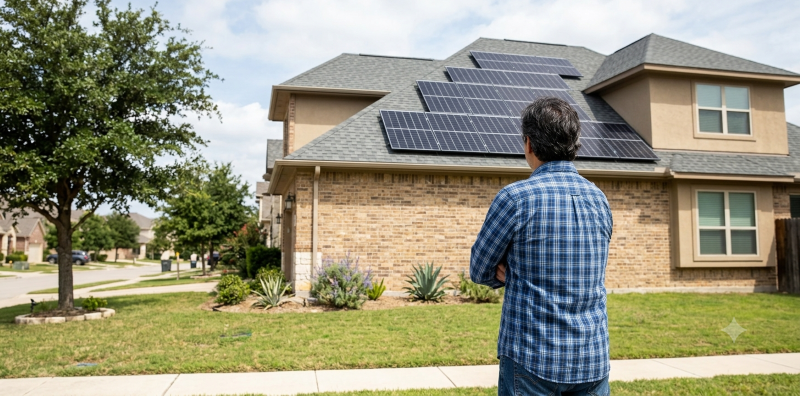
Solar panels are often marketed to Texas homeowners as a seamless way to reduce energy bills and increase property sustainability. However, thousands of property owners across the state are discovering a major hidden drawback when they attempt to sell or refinance their homes: an unexpected lien filed against their property records.
If you or someone you know is facing title issues due to a solar panel lease or financing agreement, understanding how these financing liens operate under Texas law is crucial to clearing your title.
What Is a UCC-1 Fixture Filing?
When you finance solar panels, the solar company or third-party lender rarely provides an unsecured personal loan. Instead, they protect their financial interest by filing a UCC-1 Financing Statement (often referred to as a "fixture filing") with the Texas Secretary of State.
Under Texas Business and Commerce Code § 9.501, a UCC-1 financing statement is a public notice declaring that a creditor has a security interest in specific personal property. In the case of solar installations, the lender asserts a lien over the equipment itself the solar panels, inverters, and battery systems mounted on your roof.
When you go to sell your home or execute a mortgage refinance, the title company conducts a thorough title search. Upon discovering the recorded UCC-1 filing, many title companies halt the transaction, deeming the filing a "cloud" on the title that must be satisfied or released before closing.
Do Solar Liens Actually Attach to Your Homestead?
Despite the alarm a UCC-1 filing causes during a title search, there is an important legal distinction under Texas real estate law: a standard solar panel fixture filing does not actually attach to your real property or homestead land.
The Homestead Shield: Under Article XVI, Section 50 of the Texas Constitution, a homestead is strictly protected from forced sale for most debt claims, with narrow exceptions such as purchase-money mortgages, property taxes, and properly executed mechanics liens.
Because a UCC-1 financing statement is a security interest in personal property (the solar equipment) rather than an encumbrance created under the Texas Property Code against the land itself, the finance company cannot foreclose on your house.
If a homeowner defaults on their solar financing agreement, the lender’s legal remedy is theoretically limited to repossessing the panels. However, in reality, finance companies rarely want to incur the heavy costs of removing used solar equipment especially given the risk of damaging the homeowner's roof during removal and facing subsequent property damage claims.
How to Clear a Solar Lien to Refinance or Sell
Even though a UCC-1 filing does not legally attach to the underlying real estate, title insurance underwriters are notoriously risk-averse. Many title companies will refuse to issue a clean title policy for a buyer or lender until the UCC-1 notice is addressed.
To resolve a solar lien clouding a property transaction, homeowners generally have a few primary avenues:
- Pay Off or Transfer the Financing: The fastest route to clear title is paying off the remaining solar loan balance at closing or formally transferring the financing agreement to the homebuyer (subject to lender approval).
- Request a Subordination Agreement: If you are refinancing your mortgage, the solar finance company may agree to execute a subordination agreement, formally acknowledging that your new mortgage lender holds the primary, senior lien position.
- Judicial Relief: In situations where a financing company refuses to cooperate or release an improper claim against the real property, property owners may need to initiate legal proceedings. A court can issue a declaratory judgment confirming that the UCC-1 fixture filing attaches strictly to the personal property equipment and does not constitute a valid encumbrance on the constitutional homestead, giving the title company the legal clearance required to close.
All information provided on Silblawfirm.com (hereinafter "website") is provided for informational purposes only, and is not intended to be used for legal advice. Users of this website should not take any actions or refrain from taking any actions based upon content or information on this website. Users of this site should contact a licensed Texas attorney for a full and complete review of their legal issues.