
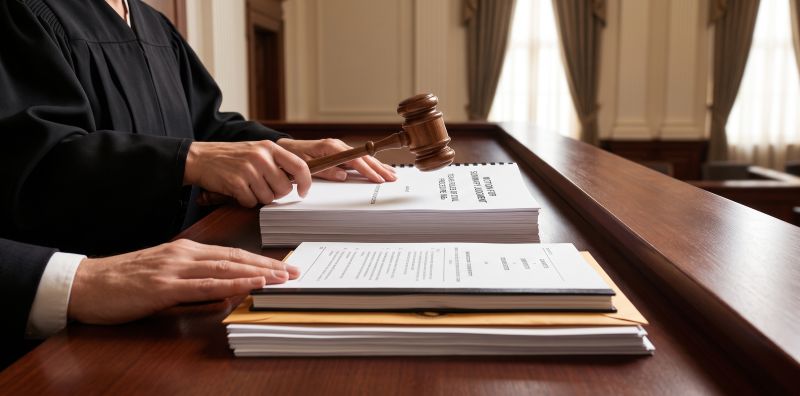
Litigation can be a long, expensive, and stressful process. When individuals file a lawsuit or find themselves defending against one, they often assume the case will inevitably lead to a full trial before a judge or jury. However, Texas civil procedure provides a procedural mechanism that allows parties to resolve a lawsuit before ever stepping into a courtroom for trial: the Motion for Summary Judgment.
Understanding how summary judgments work can help litigants evaluate the strength of their case and avoid unnecessary trial costs.
What Is a Summary Judgment?
In simple terms, a summary judgment occurs when a party asks the court to decide the lawsuit early because there are no meaningful factual disputes for a jury to resolve.
When a case goes to trial, the primary role of the jury (or judge in a bench trial) is to resolve conflicting testimony and determine the facts—for example, deciding which driver ran the red light or whether a contract was verbally modified. However, if the undisputed facts demonstrate that one party is legally entitled to win, or that the opposing party's case completely lacks supporting evidence, a trial is unnecessary.
A motion for summary judgment essentially asks the judge to apply the law to the indisputable facts and issue a final ruling immediately.
The "Trial on Paper" Concept
In Texas, summary judgment procedure is governed by Rule 166a of the Texas Rules of Civil Procedure.
In practical terms, attorneys often describe a summary judgment hearing as a "trial on paper." Unlike a traditional trial, there is no witness testimony, cross-examination, or jury present at a summary judgment hearing. Instead, the court evaluates the case strictly based on written filings and documentary evidence.
Under Texas Rule of Civil Procedure 166a, the judge bases the decision on:
- Frozen Pleadings: The formal claims and defenses on file at the time of the motion.
- Summary Judgment Evidence: Written evidence attached to the filings, such as sworn affidavits, deposition transcripts, written discovery responses, admissions, and authenticated business records.
Because no live testimony is taken, the quality and preparation of the written evidence filed before the hearing determines the outcome of the case.
Traditional vs. No-Evidence Summary Judgments
Texas law recognizes two main types of summary judgment motions, each serving a distinct strategic purpose:
- Traditional Motion for Summary Judgment (TRCP 166a(a)-(b)): The party filing the motion (the movant) carries the burden of proof. The movant must present conclusive evidence proving that no genuine issue of material fact exists and that they are entitled to judgment as a matter of law.
- No-Evidence Motion for Summary Judgment (TRCP 166a(i)): After an adequate time for discovery has passed, a party can move for summary judgment on the grounds that the opposing party has zero evidence to support one or more essential elements of their claim or defense. Once filed, the burden shifts entirely to the non-moving party to produce sufficient summary judgment evidence raising a genuine issue of material fact.
If the judge grants the motion, it can resolve part of the lawsuit or dispose of the case entirely, resulting in a final judgment without the delay and expense of a full trial.
All information provided on Silblawfirm.com (hereinafter "website") is provided for informational purposes only, and is not intended to be used for legal advice. Users of this website should not take any actions or refrain from taking any actions based upon content or information on this website. Users of this site should contact a licensed Texas attorney for a full and complete review of their legal issues.