
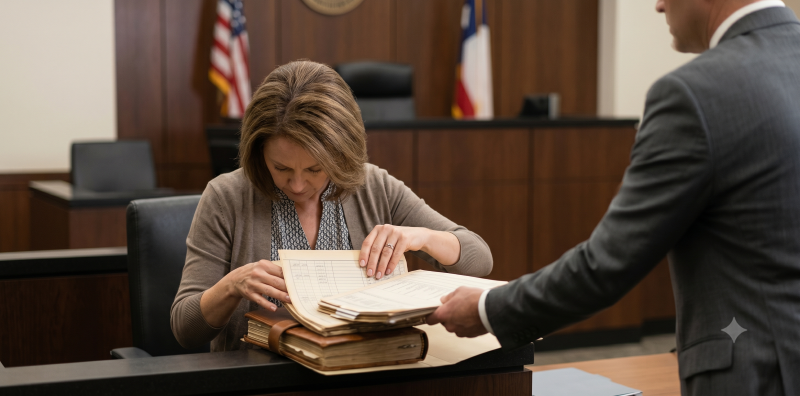
When litigating a case in Texas, getting your evidence admitted into the court record is half the battle. You cannot simply hand a contract or a ledger to the judge and expect it to be considered. Opposing counsel will almost certainly object on the grounds of hearsay. To successfully introduce your company documents and overcome these objections, every trial attorney must have the "business records predicate" memorized and ready to pull out of their pocket at a moment's notice.
Identifying the Custodian of Records
Before you can ask the specific questions required to lay the predicate, you must have the right witness on the stand. This person is legally referred to as the "custodian of records."
Fortunately, the definition of a custodian is very flexible. It does not have to be a corporate executive or an IT director. The custodian of records can be anyone in the company who has personal knowledge of how the company's records are maintained. This could be a single-member of an LLC, an apartment property manager, or a bookkeeper. As long as the witness understands the administrative processes of the business, they are qualified to authenticate the documents.
The Core Elements of the Predicate
To overcome a hearsay objection under Texas Rule of Evidence 803(6) (Records of a Regularly Conducted Activity), you must guide your witness through a specific sequence of foundational questions. Hand the document to the witness and ask the following:
- Familiarity: "Are you familiar with this document? Have you seen this record before?"
- Time of Creation: "Was this record made at or near the time of the events that are being recorded?"
- Personal Knowledge: "Were the events recorded therein made by a person with personal knowledge of the events contained in the record?"
- Standard Practice: "Is it in the usual course of your business to keep such records?"
- Ordinary Course: "Was that specific record kept in the usual course of your business?"
Once the witness answers "yes" to these questions, you have successfully laid the four corners of the business records predicate. The document legally qualifies as a business record, successfully bypassing the hearsay rule, and you can formally offer it into evidence.
Overcoming Authenticity Challenges
Even if you successfully defeat a hearsay objection using the business records exception, your hurdles are not entirely cleared. Opposing counsel's next immediate step will often be an authenticity objection under Texas Rule of Evidence 901.
While hearsay deals with the reliability of the statements inside the document, authenticity challenges whether the document is actually what you claim it to be. Opposing counsel may question:
- Can you state with certainty that this photograph accurately depicts the scene?
- Is this the actual, original lease agreement?
- Is this a certified copy, or just a transcribed note that might contain errors?
To beat an authenticity challenge, your witness must be prepared to state with absolute certainty that the document is valid, unchanged, and an exact representation of the original record. Anticipating both hearsay and authenticity objections ensures your crucial evidence actually makes it into the trial record.
All information provided on Silblawfirm.com (hereinafter "website") is provided for informational purposes only, and is not intended to be used for legal advice. Users of this website should not take any actions or refrain from taking any actions based upon content or information on this website. Users of this site should contact a licensed Texas attorney for a full and complete review of their legal issues.