
For years, the word "squatter" has struck absolute terror into the hearts of Texas property owners. Historically, if an unauthorized occupant sneaked into a vacant residential home, changed the locks, and managed to get a utility bill registered in their name, local police would throw their hands up and declare it a "civil issue." The rightful owner was then forced to spend months navigating the formal civil eviction process under Chapter 24 of the Texas Property Code just to reclaim their own property.
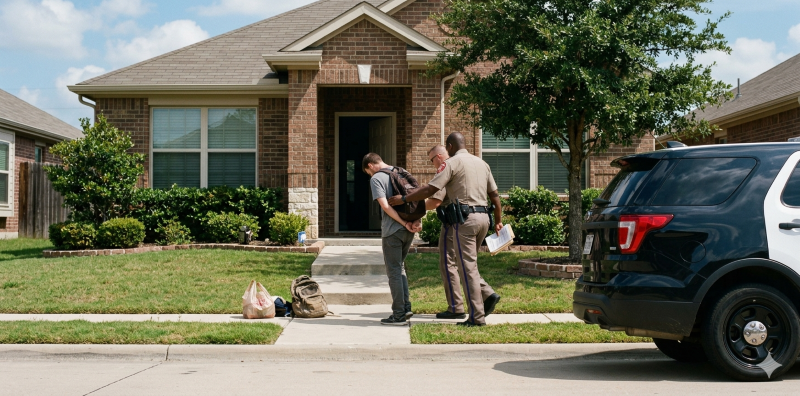
That paradigm has officially shattered. Under a landmark piece of real estate legislation that enacted Chapter 24B of the Texas Property Code, law enforcement officers across Texas have been granted broad new authority to immediately remove and arrest squatters—bypassing the traditional court process entirely.
Bypassing Due Process: The Sworn Complaint
The newly added Chapter 24B creates an expedited, non-judicial path to property reclamation, but it is strictly limited to true "squatter" situations. To trigger this immediate law enforcement response, a residential property owner (or their authorized management agent) must file a detailed sworn complaint directly with the local sheriff or constable.
To qualify for this emergency police intervention, the property owner must certify under penalty of perjury that the situation meets a rigid set of legal criteria:
- The property must be residential real property (the law does not apply to commercial spaces).
- The property was not open to the public when the squatter entered.
- There is no pending litigation between the owner and the occupant.
- The occupant is not a current or former tenant under any oral or written lease.
- The occupant is not an immediate family member of the owner (meaning you cannot use this to kick out a twenty-year-old child or a non-paying relative).
Once this sworn statement is executed and proper identification is provided, the traditional civil requirement for a judicial hearing is skipped. The owner essentially hands the file to law enforcement and asks them to clear the house.
The Burden on Law Enforcement: Judge, Jury, and Executioner?
While property owners are celebrating this "shot clock" approach to squatter removal, the mechanics of the law place an immense, unprecedented burden on local law enforcement.
Once the sheriff or constable receives the sworn complaint, the statute dictates that they shall—not may—verify that the complainant is indeed the record title holder. Upon verification, the officer must "without delay" serve a notice to immediately vacate, restore possession to the owner, and arrest the unauthorized occupants for criminal trespass if they refuse to leave.
This turns a standard deputy or constable into a real-time title investigator. Law enforcement officers are trained to handle criminal matters, not to parse through complex real property chains of title. Determining the record owner can become a legal quagmire, particularly in rural areas or in cases involving unrecorded real estate contracts. To avoid catastrophic mistakes, sheriff's departments across the state are being forced to lean heavily on county attorneys or contract out in-house real estate counsel to review these sworn statements before sending deputies to make an arrest.
The enactment of Chapter 24B represents a monumental shift in the balance of power between Texas property owners and unauthorized occupants. By transforming what was once a grueling, months-long civil nightmare into a swift law enforcement matter, the state has sent a clear message: the exploitation of civil legal loopholes by squatters is officially over.
However, the long-term success of this landmark legislation will hinge entirely on its execution. While landlords and homeowners finally have the immediate, emergency relief they have desperately sought, local sheriffs and constables are left holding a highly complex legal bag. As law enforcement agencies across the state scramble to integrate real estate counsel into their daily operations, the coming months will reveal whether this law delivers a seamless victory for property rights—or triggers a new wave of legal complications on the front lines.
Ultimately, Texas has drawn a hard line in the sand. Property owners are successfully regaining control of their front doors, but local police will be paying the price in paperwork, title screening, and legal liability to keep that peace.
All information provided on Silblawfirm.com (hereinafter "website") is provided for informational purposes only, and is not intended to be used for legal advice. Users of this website should not take any actions or refrain from taking any actions based upon content or information on this website. Users of this site should contact a licensed Texas attorney for a full and complete review of their legal issues.