
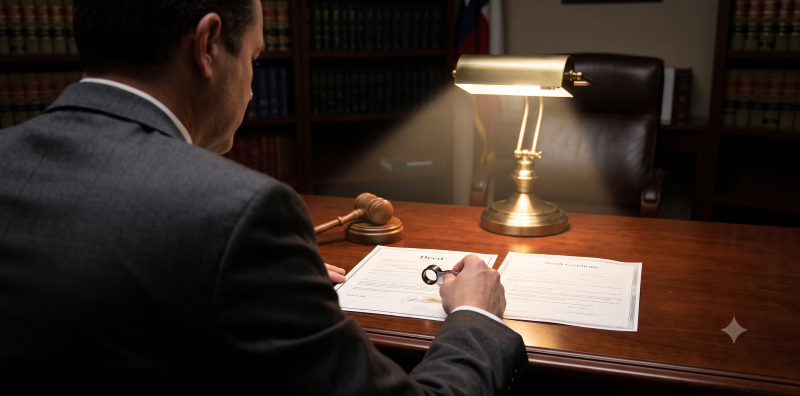
Discovering that someone has filed a forged or completely fraudulent deed against your property is a terrifying experience. In the past, clearing a stolen title was an agonizingly slow process, leaving property owners vulnerable while the wheels of justice turned.
Fortunately, Texas law provides a specialized, fast-tracked remedy designed specifically to void fraudulent documents recorded in the public records.
The Expedited Ex Parte Process
When a completely fabricated deed is filed in the county records, you do not necessarily have to wait for a full, multi-year civil trial to get relief. Under Texas Government Code § 51.903, property owners have access to an expedited, ex parte judicial review mechanism.
To utilize this process, a property owner files a specialized motion with the district court asserting that the recorded conveyance is patently fraudulent.
- No Filing Fees: Because the state recognizes you are a victim of a crime, the district clerk is explicitly prohibited from charging any filing fees to review a fraudulent deed motion under this statute.
- No Notice Required: The term ex parte means the district judge can review the motion and the attached documents completely on their own—without requiring notice to the fraudster or forcing a formal, adversarial hearing.
If the judge reviews the deed and finds clear evidence of fraud, they will immediately issue a binding finding of fact and conclusion of law declaring the instrument void. This order is then recorded in the county public records to nullify the fraudster's claim.
Why Judges Can Be Reluctant
While the expedited statutory process sounds seamless, it does feature practical hurdles. District court judges are often highly conservative when exercising their ex parte powers, as they want to be absolutely certain they aren't inadvertently stripped-away a legitimate property interest without giving the other party a chance to speak.
The expedited process works flawlessly in clear-cut, obvious cases such as presenting a death certificate proving the grantor passed away years before the deed was allegedly signed.
However, if the fraud is more nuanced, a judge may hesitate. For example, if a deed features a forged signature of a very common name, the judge will likely reject the expedited motion and force you to file a standard Quiet Title action. A quiet title lawsuit requires formal service of process, giving the other side an opportunity to appear. While this route takes significantly longer and requires standard litigation expenses, it provides the thorough evidentiary process required to clear up ambiguous title disputes.
The Myth of the "Innocent Purchaser" Defense
When property thieves steal a title, they rarely hold onto it for long; they quickly flip it to a third party at a steep discount to secure clean cash. This introduces a complex legal question: What happens if an innocent buyer purchases the land from the thief without knowing the original deed was forged?
In Texas real estate law, this brings up the concept of a Bona Fide Purchaser (BFP) or "innocent purchaser." Normally, a BFP who buys property in good faith without notice of prior defects is legally protected. However, this defense has an absolute limit.
Under Texas common law, a forged deed is considered void ab initio meaning it is legally dead on arrival and completely invalid from its inception. Because a void deed has zero legal efficacy, it passes absolutely nothing down the chain of title. It does not matter how innocent the subsequent buyer is; a thief cannot sell what they do not legally own. The original, defrauded owner is entitled to have their property returned, and the innocent purchaser's only legal recourse is to pursue the fraudster for their losses.
All information provided on Silblawfirm.com (hereinafter "website") is provided for informational purposes only, and is not intended to be used for legal advice. Users of this website should not take any actions or refrain from taking any actions based upon content or information on this website. Users of this site should contact a licensed Texas attorney for a full and complete review of their legal issues.