
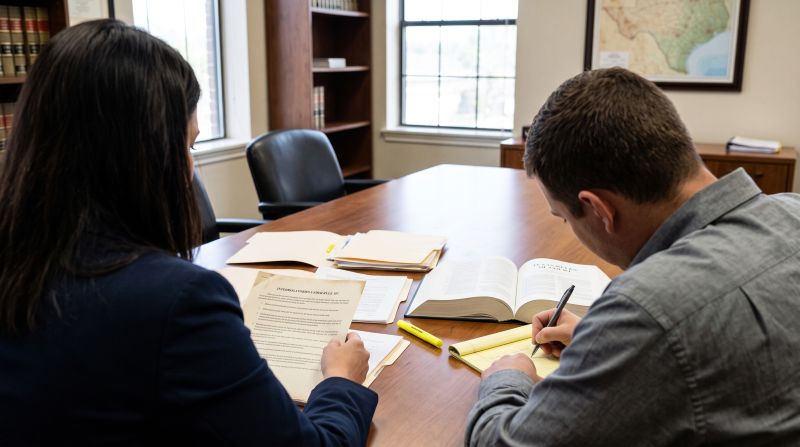
During the discovery phase of a Texas civil lawsuit, parties gather crucial information to evaluate the strength of a case and prepare for trial. While taking live depositions can be expensive, written discovery mechanisms, specifically interrogatories, provide a cost-effective way to obtain sworn statements directly from an opposing party.
Governed by Rule 197 of the Texas Rules of Civil Procedure, interrogatories require a party to answer written questions in writing and under oath, locking in key facts before trial.
Pinning Down the Facts and Preparing for Depositions
The primary objective of serving interrogatories is not to catch an opponent in a sudden "gotcha" moment, but rather to pin down their core factual assertions early in litigation.
Interrogatories allow a party to establish an unchangeable factual foundation regarding:
- Key Event Details: Specific dates, locations, and sequences of events.
- Witness Identification: Names and contact details of individuals who witnessed the underlying dispute or signed contested legal documents.
- Documentary Verification: Identifying specific records, emails, or agreements that support a claim.
A strategic approach to written discovery involves serving interrogatories before taking oral depositions. Securing sworn written responses first provides a clear roadmap for the deposition. If a witness gives live testimony that contradicts their written interrogatory answers, counsel can use the inconsistent under-oath statements to impeach their credibility.
Understanding Interrogatory Limits Under Texas Discovery Plans
To prevent parties from overburdening opponents with endless questions, Texas court rules impose strict numerical caps on interrogatories. These limits depend directly on the case's assigned discovery level:
- Level 1 Discovery Plans (TRCP 190.2): Designed for expedited actions involving $250,000 or less, parties are limited to 15 written interrogatories.
- Level 2 Discovery Plans (TRCP 190.3): As the default standard for most Texas civil litigation, each party is permitted up to 25 written interrogatories.
Once a party hits their statutory limit, they cannot serve additional interrogatories without court permission or an agreement between the parties.
Navigating the "Subpart" Trap Under TRCP 197.1
A common area of dispute in Texas written discovery is whether complex multi-part questions violate the statutory limits. Under Texas Rule of Civil Procedure 197.1, each discrete question counts as a single interrogatory.
However, attorneys often attempt to expand the 25-question limit by stacking subparts (e.g., asking Question 1 with subparts A through J), effectively turning a single prompt into ten separate inquiries.
To remain legally compliant, subparts must directly relate to a single, unified topic. Asking a party to "describe the execution of a contract" and instructing them to include the date, location, and present witnesses counts as one valid interrogatory. Conversely, combining completely separate factual inquiries into a single numbered prompt to evade the statutory cap violates Texas discovery rules.
All information provided on Silblawfirm.com (hereinafter "website") is provided for informational purposes only, and is not intended to be used for legal advice. Users of this website should not take any actions or refrain from taking any actions based upon content or information on this website. Users of this site should contact a licensed Texas attorney for a full and complete review of their legal issues.