
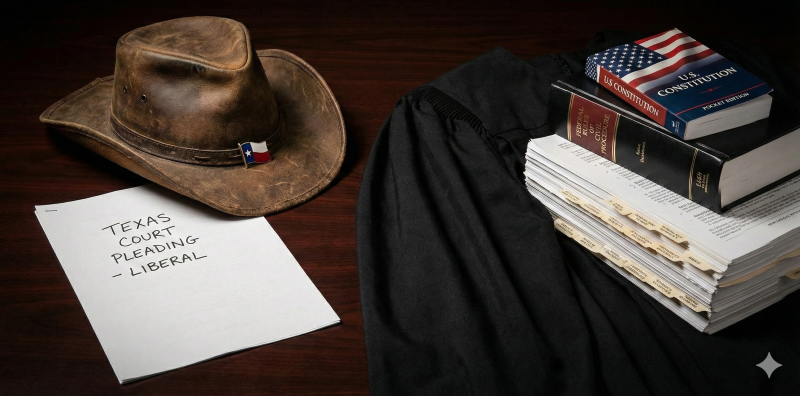
Filing a formal response to a lawsuit is a critical step for any defendant. However, the complexity of this initial pleading differs significantly between Texas state courts and the federal court system, largely due to Texas's unique and liberal pleading standards.
Texas: The Liberal Pleading Standard
Texas state courts are often described as having a liberal pleading standard. This philosophy, enshrined in the Texas Rules of Civil Procedure, means that courts will construe pleadings broadly and leniently to ensure fair notice.
The key feature of the Texas system is the General Denial.
- Under this standard, a defendant can file a simple statement, even something handwritten or vaguely worded, that broadly denies the plaintiff's claims. If the court can interpret the words to mean "the plaintiff is wrong," it will generally be accepted as a General Denial.
- This simple act is usually enough to prevent an immediate default judgment, and allow the defendant to participate in the rest of the litigation. This makes the initial step of responding to a lawsuit far less daunting for a pro se defendant (someone representing themselves).
Federal Court: The Specific Pleading Standard
Federal court operates under a much stricter requirement, primarily governed by Federal Rule of Civil Procedure 8(b).
- In federal court, a defendant must specifically deny claims or allegations. This means the defendant cannot simply file a blanket denial of all claims; they must go through the plaintiff's complaint and address each allegation individually, admitting what is true and denying what is false.
- This requires a more involved and technical document. For a layperson, preparing a legally sufficient answer in federal court is significantly more challenging than preparing a General Denial in Texas state court.
It is important to remember that the filing of a responsive pleading is only the first step in the litigation process. If you have been sued in state or federal court, it is advisable to contact an experienced litigation attorney.
All information provided on Silblawfirm.com (hereinafter "website") is provided for informational purposes only, and is not intended to be used for legal advice. Users of this website should not take any actions or refrain from taking any actions based upon content or information on this website. Users of this site should contact a licensed Texas attorney for a full and complete review of their legal issues.