
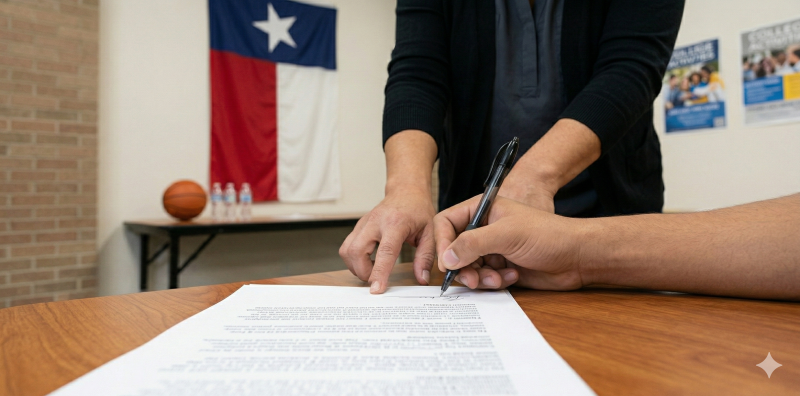
In the age of social media influencers and high school sports stars, the ability to monetize one’s Name, Image, and Likeness (NIL) has become a major point of discussion. However, when the person in question is under the age of 18, the legal landscape in Texas becomes significantly more complex. While a teenager might be ready for their "big break," the law often stands in the way of a simple signature.
The General Rule: Minor Incapacity
In Texas, the baseline legal principle is that minors lack the legal capacity to enter into binding contracts. This means that, generally speaking, any contract signed solely by a minor is voidable, allowing the minor to disaffirm or back out of the agreement.
This principle extends to Name, Image, and Likeness (NIL) deals and even simple media release forms. If a minor signs a release granting a company the right to use their likeness for commercial purposes, that agreement may not hold up in court. This protection exists to prevent young people from making long-term financial or reputational commitments that they might regret once they reach adulthood.
The NCAA Exception and New Legislation
Texas has recently carved out a very specific and high-profile exception to the rules of minor incapacity. Driven by the massive economic shift in collegiate athletics, the state legislature passed laws allowing certain high school athletes to engage in NIL activities.
Specifically, under recent updates to the Texas Education Code, 17-year-old student-athletes are permitted to sign NIL deals with post-secondary institutions. This change was designed to keep Texas competitive in the recruitment of top-tier talent, effectively altering centuries of contract law to ensure that student-athletes can begin their professional branding journey before their 18th birthday. However, it is important to note that this exception is narrow and primarily applies to athletes transitioning into the NCAA system.
Guardianship and Court Supervision
For minors who fall outside the specific student-athlete exception, such as child actors or musicians, securing a binding contract usually requires a Guardianship of the Estate.
Under the Texas Estates Code, a parent is considered the natural guardian of a child’s person (their physical well-being), but they are not automatically the guardian of the child's estate (their money and property). To make a contract legally enforceable:
- A court must appoint a guardian of the estate.
- The court must oversee and approve the terms of the contract.
- The guardian is often required to file annual accountings to ensure the minor's earnings are being managed appropriately.
Without this court-supervised process, any company entering into an NIL deal with a minor takes on a significant legal risk. While many teens today spend their lives posting content online, moving from social media posts to formal NIL contracts requires navigating a rigorous statutory framework.
All information provided on Silblawfirm.com (hereinafter "website") is provided for informational purposes only, and is not intended to be used for legal advice. Users of this website should not take any actions or refrain from taking any actions based upon content or information on this website. Users of this site should contact a licensed Texas attorney for a full and complete review of their legal issues.