
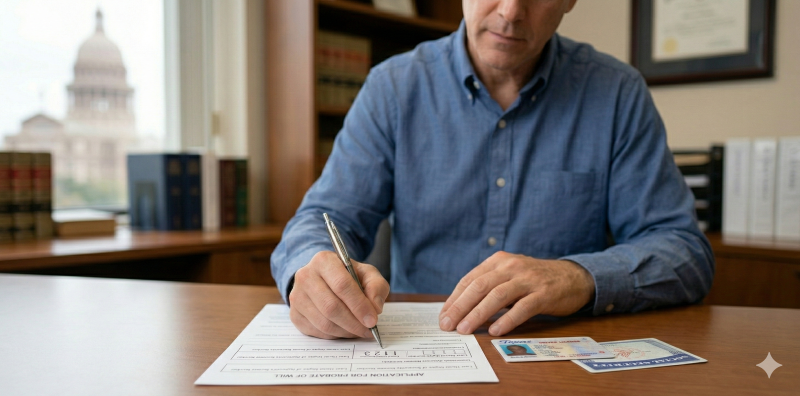
When filing an application to probate a will in Texas, many applicants are surprised and often concerned to find requests for sensitive personal information. In an era of rampant identity theft, providing a Social Security number (SSN) or Driver’s License (DL) number to a public court record feels counterintuitive. However, the law has specific requirements designed to ensure the accuracy of the record.
The Statutory Requirement: Texas Estates Code
If you look strictly at the letter of the law, the requirements are clear. According to Texas Estates Code § 256.052(a), an application for the probate of a will must include the "last three numbers of the applicant's driver's license number and social security number," if the applicant has been issued those identifiers.
This statute exists to uniquely identify the person stepping forward to manage the estate. While it may feel like an invasion of privacy, the law attempts to strike a balance by only requiring the last three digits rather than the full numeric string. This limited disclosure is usually sufficient for court identification purposes while offering a layer of protection against the misuse of personally identifiable information (PII) by bad actors scanning public records.
Theory vs. Practice in the Courtroom
There is often a gap between what is written in the legal code and what occurs in daily practice. In many uncontested probate cases, a judge may not take issue if a social security or driver’s license number is missing because it simply wasn't available.
While the code serves as the rulebook, many probate judges prioritize the administration of justice over bureaucratic nitpicking. If an application is filed without these numbers because they are unknown, many courts will allow the process to move forward, especially if no one is contesting. However, it is always a best practice to provide the numbers if they are available to avoid unnecessary delays or requests for amendments from the court coordinator.
Privacy Concerns and the Amendment Process
For those who are concerned about privacy, the thought of any part of an SSN being in a public file is unappealing. It is a common psychological quirk that people feel comfortable giving out the last four digits of their SSN but hesitate when asked for the last three, as the latter feels less familiar.
If you omit this information and the judge decides it is crucial for that specific filing, Texas has a very generous amendment policy. The court will typically notify the attorney that the application is deficient, at which point an amended application can be filed to include the missing data. This flexibility ensures that a simple clerical omission doesn't derail the entire probate process, allowing the focus to remain on the lawful distribution of the estate's assets.
All information provided on Silblawfirm.com (hereinafter "website") is provided for informational purposes only, and is not intended to be used for legal advice. Users of this website should not take any actions or refrain from taking any actions based upon content or information on this website. Users of this site should contact a licensed Texas attorney for a full and complete review of their legal issues.