
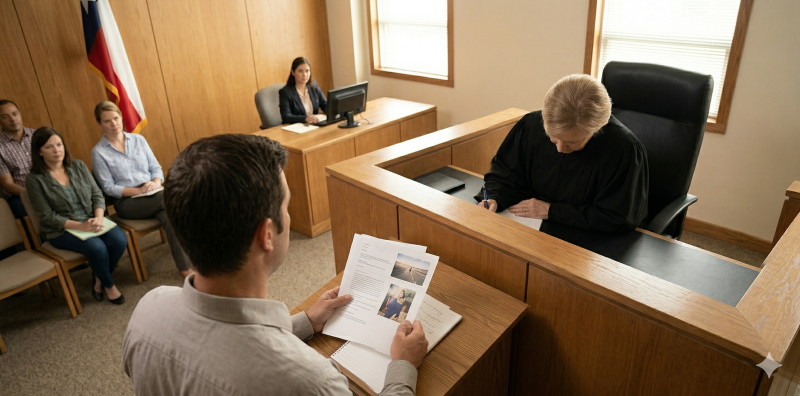
One of the most frustrating hurdles in the legal system is the economic barrier to entry. If you are owed $5,000, paying a $5,000 retainer to an attorney to recover that debt simply doesn't make sense. Fortunately, the Texas legal system provides a specific venue designed for these exact scenarios: the Justice of the Peace (JP) Court, commonly known as Small Claims Court.
The "People’s Court": Why JP Court Is Different
The Justice of the Peace courts are specifically designed to be accessible to the general public without the need for a law degree. These courts are tasked with developing the facts of the case and ensuring a fair outcome even when parties are unrepresented (pro se).
The most significant advantage of Small Claims Court is the relaxation of the Texas Rules of Evidence. In higher-level courts, such as County or District courts, a judge will strictly enforce rules regarding hearsay and the authentication of documents. If you try to show a judge a contract or an email in a higher court without knowing the proper predicate to get it admitted into evidence, the other side's attorney will likely object, leaving you befuddled. In JP court, the process is far more informal, much like what you see on televised court shows allowing you to stand at the podium, present your documents, and tell your story in narrative form.
Jurisdiction and Filing Costs
Small claims cases in Texas are governed by Chapter 27 of the Texas Government Code. As of 2026, the jurisdictional limit for these courts is $20,000. This means if your claim is for $20,000 or less (excluding statutory interest and court costs), the JP court has the authority to hear your case.
Filing a case is relatively inexpensive. Usually, for a couple hundred dollars, you can file your petition and have the defendant served with a citation. This low cost of entry makes it the ideal venue for individual consumer disputes, security deposit controversies, or small business debt collections that wouldn't justify high hourly attorney fees.
The Risks of Moving to Higher Courts
While you can file a small claim in a County or District court, it is rarely advisable for a self-represented party. Higher courts are courts of record, and judges there are less likely to indulge a lack of procedural knowledge.
If you are unrepresented in a higher court and facing an experienced attorney, that attorney will use the Rules of Evidence as a weapon. They can object to testimony as hearsay or argue that your documents haven't been properly authenticated. Without a lawyer to navigate these technicalities, you may find your case dismissed before you even get to the heart of your story. For claims under the $20,000 threshold, the JP court remains the most efficient path to justice for the average Texan.
All information provided on Silblawfirm.com (hereinafter "website") is provided for informational purposes only, and is not intended to be used for legal advice. Users of this website should not take any actions or refrain from taking any actions based upon content or information on this website. Users of this site should contact a licensed Texas attorney for a full and complete review of their legal issues.